Buyer's Guide
Abaya Manufacturing by Country: UAE, Turkey, Pakistan, China and Indonesia Compared
Last updated —8 min read

Buyers new to abaya sourcing often ask which country makes the best abayas. It is the wrong question, though an understandable one. Good and bad manufacturers exist everywhere, and the difference between two factories in the same city is often larger than the difference between two countries. The more useful question is which kind of manufacturer suits your order — and different regions do tend to lean in different directions.
What follows is deliberately general. We do not name or rank individual manufacturers, and we do not quote prices, which move too fast to publish responsibly. We are also not neutral: NAH is a manufacturer in the UAE. We have written this as fairly as we can, including where another region may suit you better than we would.
Five things, roughly in this order. Your order size, because minimums vary widely between manufacturers and regions. The aesthetic you sell, because makers closest to a market tend to understand its taste. Fabric access, because the cloth drives both the look and the price. Communication, because every change you want has to travel between you and the person sewing. And total landed cost — unit price plus shipping, duty and tax — because the cheapest unit price is not always the cheapest garment on your rail.
The UAE sits at the centre of the Gulf abaya market, which is arguably the most demanding and design-literate abaya market in the world. Manufacturers here work close to the customers who set the region's taste, and close to the markets where lace, trims and fabrics for that taste are traded. That tends to make the UAE a strong fit for Gulf-style design, occasion wear and buyers who want a garment that reads as current in the Gulf.
The trade-offs are real. Labour costs are generally not the lowest of the regions here, so buyers chasing the lowest possible unit price at high volume may find better value elsewhere. The UAE's strength is proximity to the aesthetic and to the trim markets, not scale.
Turkey has a large textile and garment industry and a substantial domestic modest-fashion sector of its own, with a distinct aesthetic that is often more tailored and more influenced by European fashion than Gulf styling. Its geographic position makes it a natural consideration for European buyers.
Turkey can suit buyers who sell a contemporary, tailored modest look — coats, structured pieces, co-ords — and those who value proximity to European markets. Buyers who sell a specifically Gulf aesthetic should check that a Turkish maker's sense of the style matches theirs, since the two traditions differ.
Pakistan has a long and deep tradition of hand embroidery and embellishment, and a large textile industry. That tends to make it a strong option for work-heavy pieces, where hand embellishment is a significant part of the garment's value.
Buyers sourcing heavily embellished designs often look here. As with any region, communication, finishing consistency and lead times vary considerably between individual manufacturers, so vetting the specific maker matters more than the country.
China's garment industry is known for scale and for an extensive fabric and supply-chain base, including many synthetic fabrics used in everyday abayas. That can make it well suited to high-volume, price-driven orders of simpler designs.
The trade-off for a small brand is usually minimums: factories set up for scale may have minimums that do not suit someone testing a few designs, and communication across time zones and languages can slow the back-and-forth that custom design needs. For a buyer with a proven design and volume to match, it can be a strong option.
Indonesia has one of the largest domestic modest-fashion markets in the world and a correspondingly strong modest-fashion industry, with an aesthetic of its own — often lighter, more colourful and built for a hot, humid climate.
Indonesian makers can suit buyers selling to Southeast Asian customers, or anyone whose look is closer to that aesthetic than to Gulf styling. Buyers wanting classic Gulf occasion wear should check that a maker's sense of the style fits.
| Region | Often suits | Worth checking |
|---|---|---|
| UAE | Gulf-style design, occasion wear, proximity to Gulf trim and fabric markets | Unit cost at very high volume |
| Turkey | Tailored, European-influenced modest wear; European buyers | Fit with a specifically Gulf aesthetic |
| Pakistan | Hand embroidery and embellishment-heavy designs | Finishing consistency and lead times of the specific maker |
| China | High-volume, price-driven orders of simpler designs | Minimums and communication for small or custom runs |
| Indonesia | Southeast Asian modest aesthetic; lighter, hot-climate pieces | Fit with Gulf occasion styling |
Start from your customer, not from the map. If you sell Gulf-style abayas to customers who know the look, work with someone close to that aesthetic. If you sell embellishment, look where embellishment is a craft. If you have one proven design and need thousands, look where scale is cheap. And if you are testing several designs at small quantities, the minimum order matters more than anything else on this list.
Then vet the individual maker with the same questions wherever they are: factory or middleman, minimum per design, how trims are sourced, production and delivery times as separate numbers, and a landed cost for your destination. Our checklist for choosing an abaya manufacturer sets those out in full.
NAH manufactures in Ajman, UAE, from 8 pieces per design. See how we work.
Wholesale & manufacturing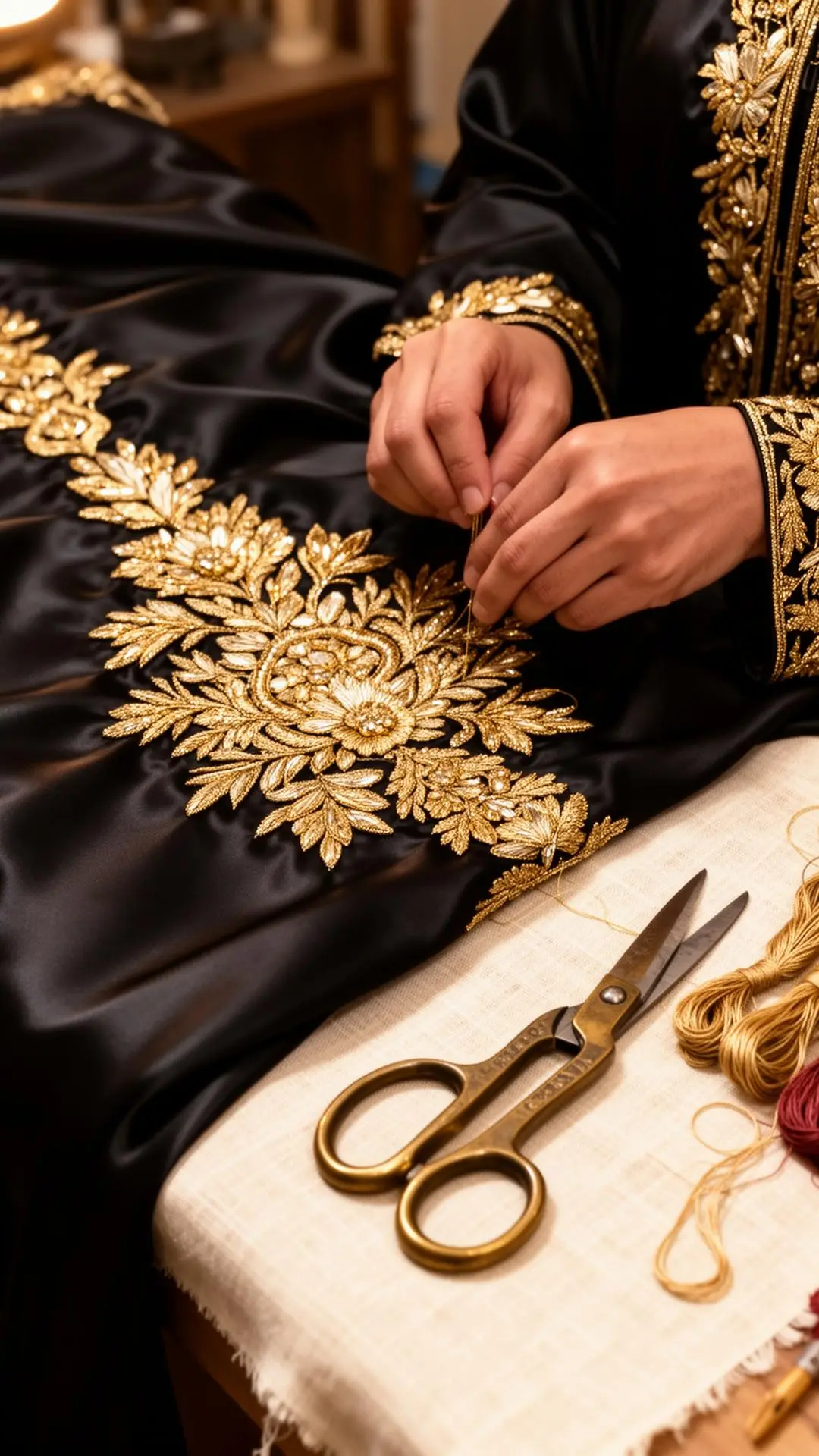
Twelve questions to ask any abaya manufacturer before you place an order — and what a good answer sounds like.
The general principles of importing abayas — duty, import tax, classification, who pays and where to check — with links to the official customs authority for each market.
What a minimum order quantity is, why manufacturers set one, and how a low MOQ changes the risk of starting a boutique or brand.