Buyer's Guide
Abaya MOQs Explained: Why Low Minimum Orders Matter for New Boutiques
Last updated —7 min read
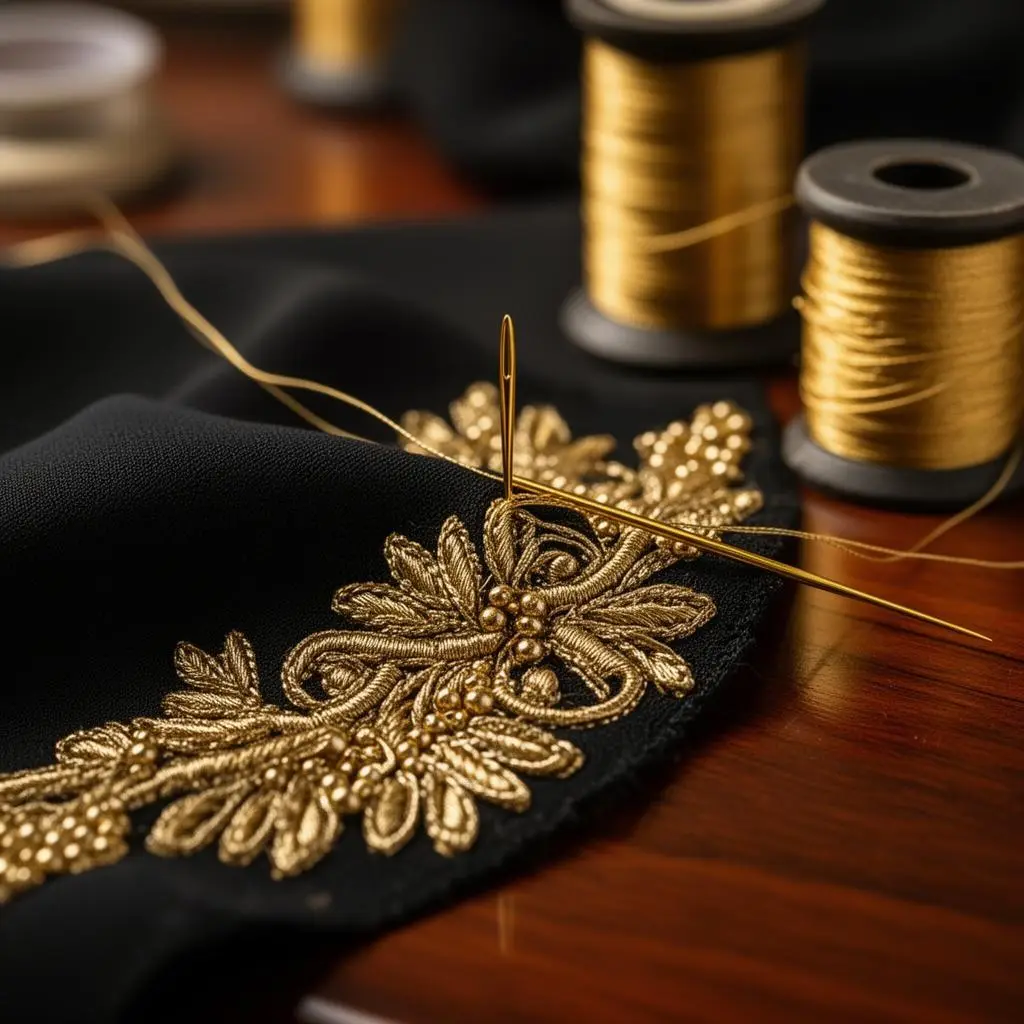
The minimum order quantity is often the first number a new boutique hears from a manufacturer, and frequently the reason the conversation ends. Understanding why minimums exist makes it easier to compare them, to negotiate sensibly, and to see why a low one can matter more than a low unit price.
A minimum order quantity is the smallest number of pieces a manufacturer will produce in one order. For abayas it is usually quoted per design, but it can also be per colour or per order in total, so the first question is always which. A minimum of 50 across an order of five designs is ten per design; a minimum of 50 per design is 250 pieces for the same five designs.
Because every design carries fixed work that is the same whether you order eight pieces or eight hundred. The pattern has to be made and graded across sizes. The cutting has to be set up. Fabric has to be sourced, and fabric is often bought by the roll, not by the metre a small order actually needs. Trims have their own minimums from their suppliers. And each order carries its own handling, checking and packing.
That fixed work has to be paid for somewhere. Spread over many pieces it disappears into the unit price; spread over a few, it is visible. A minimum is how a manufacturer makes sure there are enough pieces to carry it.
Because a new boutique's biggest risk is not the unit price. It is stock that does not sell. Unsold abayas are money sitting in a stockroom, and for a small business that money is often the budget for the next order.
A low per-design minimum changes the shape of that risk. Instead of committing a whole budget to one or two designs and hoping, a boutique can spread the same money across several designs, see which sell, and reorder those. The first order becomes a way to learn what customers want, rather than a bet on what they might.
| Higher per-design minimum | Low per-design minimum (8) | |
|---|---|---|
| Designs in a first order of about 32 pieces | One, perhaps two | Four |
| What you learn | Whether one design sells | Which of four designs sell |
| If a design does not sell | Much of the order is unsold | A quarter of the order is unsold |
| Reordering a winner | Waits until you can afford volume | Possible in a small quantity |
Sometimes, on unit price. Because the fixed work per design is spread over fewer pieces, very small runs can cost more per garment than large ones. For a brand with a proven design and the volume to match, a larger order may well be cheaper per piece.
The honest comparison is not unit price against unit price. It is the total money at risk, and what you learn for it. For a new boutique, paying a little more per piece to find out which designs sell is often the cheaper route overall.
Use it to test breadth, not depth. Order several designs at the minimum rather than one design at many times the minimum. Keep your branding consistent across them, so every piece builds the brand even if some designs do not sell. Watch sell-through closely in the first weeks, and reorder what works quickly — a low minimum means a reorder does not have to wait.
Ask your manufacturer, too, whether lengths or colours can be mixed within a design's minimum. Practices vary between manufacturers, and the answer affects how you build a size run. At NAH, ask us when you enquire.
Sometimes, and it is worth asking politely rather than assuming either way. What usually moves a minimum is not haggling but making the order easier to produce: taking a fabric the manufacturer already has in stock, accepting a colour they are already cutting, ordering several designs that share one fabric, or being flexible on timing so your run fits a gap in their schedule.
What rarely works is asking for a lower minimum on a complex custom design in an unusual fabric, because that is precisely the order where the fixed setup work is highest. If a manufacturer holds firm on a minimum for a design like that, it is usually a sign they have costed it honestly rather than a sign they do not want your business.
NAH produces from 8 pieces per design, and several designs can share one production run.
Wholesale & manufacturing
Twelve questions to ask any abaya manufacturer before you place an order — and what a good answer sounds like.
A week-by-week plan for launching an abaya brand — from positioning and first designs to production, photography and launch.
How abaya lengths work, how to measure, and how to split a wholesale order across lengths so the sizes you stock match the customers you have.