Buyer's Guide
Abaya Styles Glossary: Open, Closed, Butterfly, Kimono, Farasha, Bisht and More
Last updated —8 min read
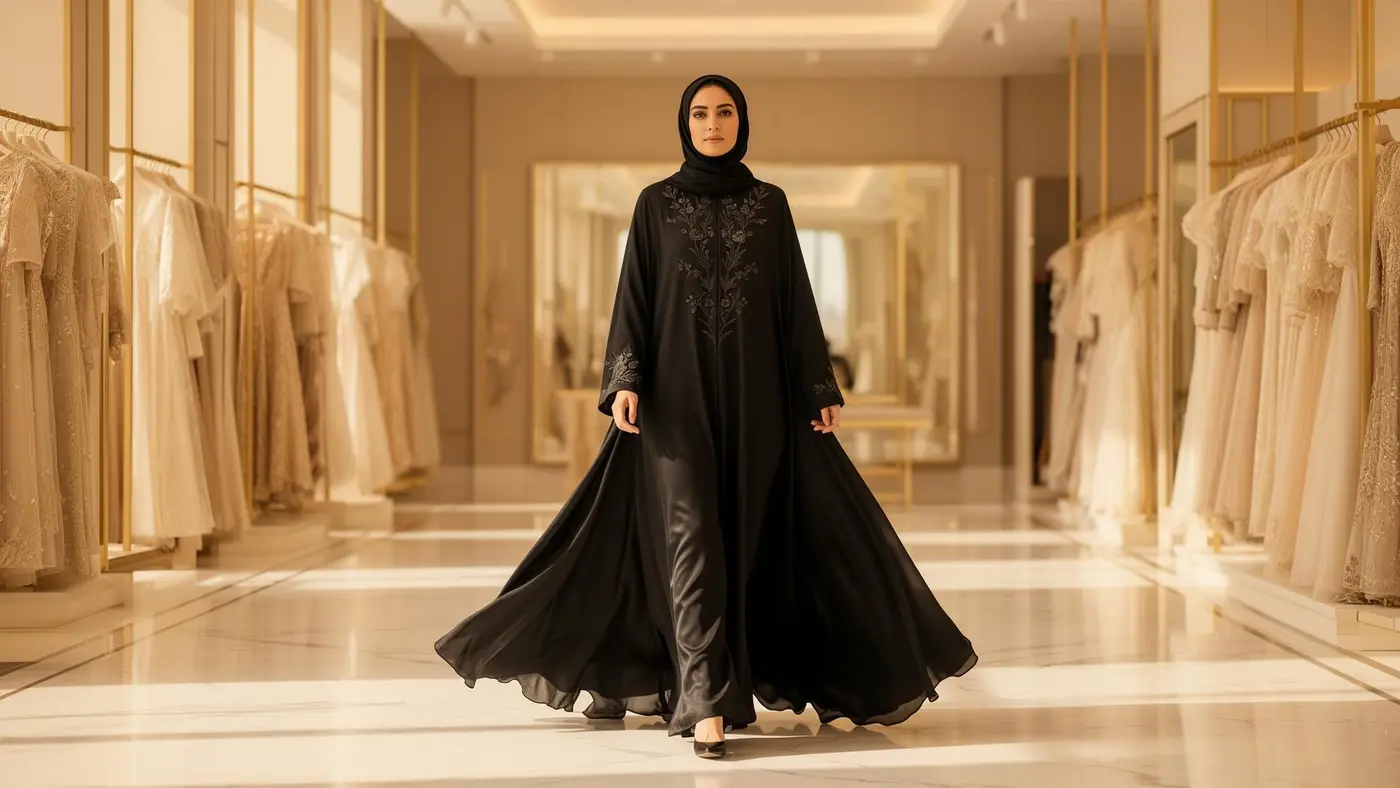
Abaya style names are used loosely, and the same word can mean slightly different things to different sellers. That is a real problem when you are ordering: a buyer asks for a kimono abaya, the manufacturer makes their idea of one, and the two ideas do not match. This glossary sets out what the common names usually mean — and the practical lesson at the end is to always send a picture as well as a name.
A closed abaya is fully closed at the front, either pulled over the head or fastened along its length so that it reads as one continuous garment. It is the classic form and the most formal in many settings. Closed abayas suit almost any fabric; in heavier crêpe or nida they hang with weight and hold a clean line.
An open abaya, or open-front abaya, is designed to be worn open like a long coat or duster over an outfit, showing the clothes beneath. Many have a hidden snap or tie so they can be closed when wanted. Open abayas are popular for daily and work wear, and they are often the first style boutiques outside the Gulf stock, because they layer easily over existing wardrobes.
A butterfly abaya is cut very wide, often from a broad piece of fabric, so that the sleeves are formed by the width of the garment itself rather than set in. When the arms are raised, the fabric spreads like wings. Farasha is the Arabic word for butterfly, and farasha abaya is often used for the same cut.
Because the shape depends on the fabric falling freely, butterfly and farasha abayas suit fluid cloth — soft crêpes, chiffon, georgette — and look stiff in heavily structured fabric.
A kimono abaya borrows the shape of the Japanese kimono: wide, straight, often rectangular sleeves, and usually an open or wrapped front, sometimes with a belt or sash. It sits between the open abaya and the butterfly in feel — structured at the shoulder, generous at the sleeve. Kimono abayas work in mid-weight fabrics that hold the sleeve's shape, such as nida or a mid-weight crêpe.
The bisht is a traditional men's cloak worn over the thobe on formal occasions, often edged with embroidered trim, frequently in gold. A bisht abaya borrows that silhouette for women: a wide, cloak-like outer layer, usually open at the front, with decorative trim running along the front edges. It is an occasion style, and it depends heavily on the trim — which, like most trims, has to be sourced from the market rather than made to order.
A kaftan abaya takes its shape from the kaftan: loose, straight or gently flared, usually pulled over the head, often with embellishment at the neckline or sleeves. It reads as relaxed and is popular for home, holidays and warm climates. Lighter fabrics — linen, cotton blends, soft crêpe — suit it best.
| Style | What it usually means | Fabrics that suit it |
|---|---|---|
| Closed | Fully closed front; one continuous garment | Almost any; crêpe and nida hang cleanly |
| Open | Worn open like a long coat over an outfit | Nida, crêpe, linen |
| Butterfly / farasha | Very wide; sleeves formed by the garment's width | Fluid crêpe, chiffon, georgette |
| Kimono | Wide straight sleeves; usually open or wrapped front | Mid-weight nida or crêpe |
| Bisht | Cloak-like, open front, trim along the front edges | Structured fabric that carries trim |
| Kaftan | Loose, straight or gently flared, pulled over | Linen, cotton blends, soft crêpe |
| Coat / jacket | Tailored, structured, often with lapels or a collar | Structured nida, heavier crêpe |
| Cape | A cape layer over the shoulders | Fabric with enough body to drape |
| A-line / umbrella | Close at the shoulders, flaring widely to the hem | Crêpe with drape |
| Batwing | Deep sleeves cut from the body, dolman-style | Fluid fabric |
| Belted | Worn with a belt or tie that shapes the waist | Mid-weight fabric |
| Pleated | Pleats at the back, sleeves or skirt | Fabric that holds a crease |
It changes how the style wears. Closed and open abayas can be fastened with hidden snaps, buttons, a zip, a tie or a belt, or left without a fastening at all. For a buyer, the fastening matters practically: snaps and zips make an abaya quicker to put on, while exposed buttons become part of the design. Say which you want when you order, because it changes the pattern.
Because they are not standardised. One seller's kimono abaya is another's open abaya with wide sleeves; one region's farasha is another's butterfly. Nothing is wrong with that in a shop, but it causes real problems between a buyer and a manufacturer, where the name is supposed to specify something.
The fix is simple: send a photo or a video with every name, and include the back — abaya backs often carry the most distinctive part of the design. A manufacturer can work from a picture far more reliably than from a word.
Send us a photo of any style and we will make it, from 8 pieces per design.
Custom abayas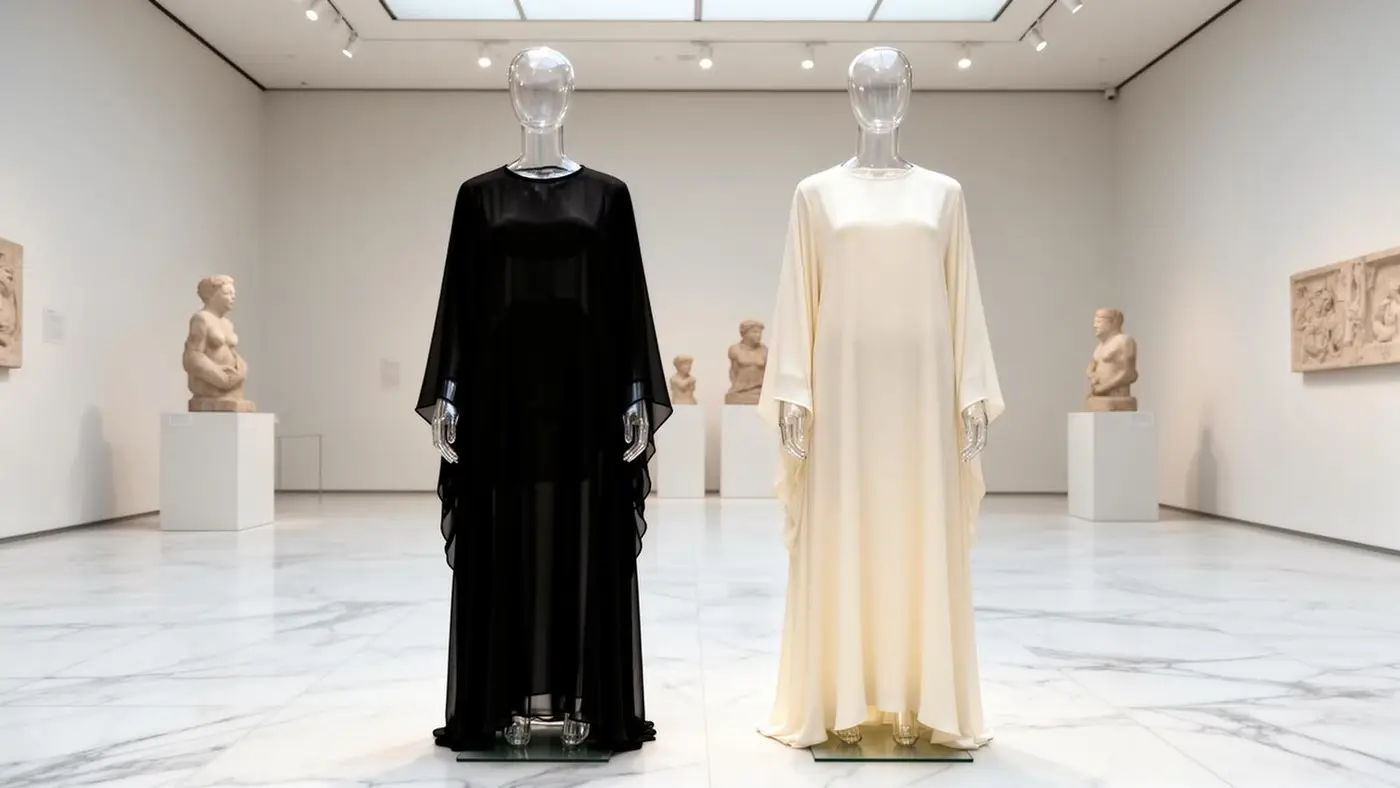
How abaya lengths work, how to measure, and how to split a wholesale order across lengths so the sizes you stock match the customers you have.

Twelve questions to ask any abaya manufacturer before you place an order — and what a good answer sounds like.

Where abayas are made, and what each manufacturing region tends to be good at — a fair, general comparison for buyers deciding where to source.